One orchestration layer for the whole last mile
Kelvara sits between your order systems and everything that physically moves a parcel — vans, couriers on foot, partner carriers and locker cabinets. Five capabilities, one data model, no reconciliation spreadsheets.
Route optimisation
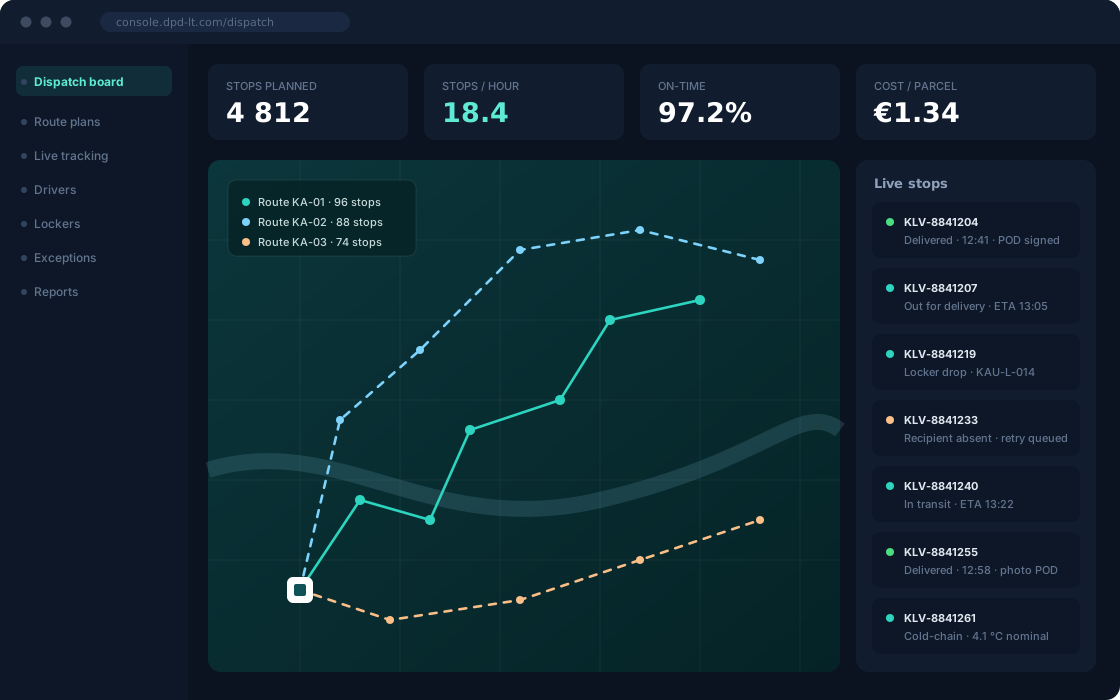
The planner solves a capacitated vehicle-routing problem with time windows across your whole depot, not one route at a time. It reads live traffic profiles, historical service times per address type, and the constraints your dispatchers would otherwise apply by hand.
- Hard and soft constraints — time windows, vehicle capacity by volume and weight, tail-lift and cooling requirements, driver shift limits and mandatory breaks.
- Learned service times — a stop at a nine-storey Soviet-era block is not a stop at a detached house. Kelvara learns the difference from your own completion data.
- Mid-shift replanning — reoptimise remaining stops when a vehicle breaks down, a customer reschedules, or an urgent order lands after cut-off.
- Scenario comparison — run the same day against different fleet mixes or depot cut-offs and compare cost per parcel before committing.
Driver app
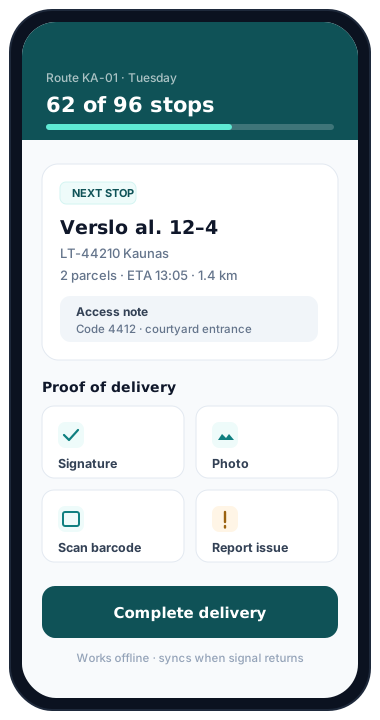
A focused Android and iOS app that shows a driver the next stop and almost nothing else. Built offline-first, because coverage between Utena and Zarasai is not a design assumption you get to make.
Offline by default
The full manifest, map tiles and access notes are cached at shift start. Completions queue locally and sync when signal returns.
Access intelligence
Entrance codes, courtyard notes and previous-attempt outcomes travel with the address, contributed by whoever delivered there last.
Turn-by-turn handoff
Hands the leg to the driver's preferred navigation app, or uses the built-in guidance where you need the telemetry back.
Five languages
Lithuanian, Latvian, Estonian, Polish and English, switchable per driver profile without a reinstall.
Proof of delivery
Every completion produces an evidence record: what was handed over, to whom, where, when, and by which driver. Disputes get answered from the record instead of from memory.
Capture methods
On-glass signature, photo, barcode or QR scan, locker pickup event, one-time PIN, or age and ID checks where the goods require them.
Context attached
GNSS fix with accuracy radius, device clock and server clock, driver identity, and the parcel state transition that the event caused.
Retention you control
Signature images and photos expire on a schedule you set per contract. Erasure requests propagate to backups within the documented window.
Parcel-locker integration
Treat lockers as first-class delivery endpoints rather than a separate operation. Kelvara maintains a live model of every cabinet you own or buy access to — compartment sizes, current occupancy, dwell time and door faults.
The planner will route a parcel to a locker when that is cheaper and the recipient allows it, reserve a compartment of the right size before the van leaves, and fall back to a doorstep attempt when the network is full.
Read: parcel-locker economics, line by lineCompartment reservation
Size-aware holds placed at plan time and released automatically if the parcel is not loaded.
Dwell-time management
Escalating reminders, configurable grace periods and automatic return-to-depot jobs for abandoned parcels.
Third-party networks
Adapters for partner cabinet operators so mixed networks appear as one inventory to your planners.
Utilisation reporting
Per-cabinet occupancy curves that tell you where to add doors and where to decommission them.
Recipient choice
Offer a nearby locker at checkout or after a failed attempt, with walking distance shown.
Fault detection
Doors that fail to latch or report inconsistent occupancy are pulled from allocation automatically.
Real-time tracking API
Every state change a parcel goes through is an event you can subscribe to. ETAs are recomputed from live vehicle positions and remaining stop sequence, so the window a customer sees narrows as the van gets closer instead of jumping when it is already late.
- Signed webhooks with at-least-once delivery and exponential backoff
- Embeddable tracking page, white-labelled to your domain and brand
- ETA confidence bands, not a single optimistic minute
- Full event history retained for the life of the shipment record
{
  "id": "evt_01HQ8M2K4Z",
  "type": "shipment.eta_updated",
  "created_at": "2026-07-14T10:22:41Z",
  "data": {
    "shipment_id": "shp_9F41CX22",
    "tracking_code": "KLV-8841207",
    "status": "out_for_delivery",
    "eta": {
      "earliest": "2026-07-14T12:55:00Z",
      "latest":   "2026-07-14T13:15:00Z",
      "confidence": 0.91
    },
    "stops_remaining": 4
  }
}Fits the systems you already run
Kelvara is designed to be the layer that other systems talk to, not a replacement for them. Orders arrive by API, SFTP batch or connector; events flow back the same way.
Built for regulated operations
EU data residency
Primary and replica storage in Frankfurt and Stockholm. No routine transfers outside the EEA.
Role-based access
Granular roles for planners, depot leads, drivers and read-only auditors, with SSO via SAML or OIDC.
Audit trail
Every plan change, manual override and data export recorded with actor and timestamp.
Documented DPA
Standard processor terms, sub-processor register and breach-notification commitments.
Bring a week of stops. We will show you the difference.
A structured evaluation takes about three weeks: historical replay, a sandbox integration, then one depot running live alongside your current process.